
As artificial intelligence becomes widespread across all sectors, certifying it for safety‑critical systems remains a major challenge. The SNCF Group, through its investment arm 574 Invest, has just reaffirmed its support for Numalis, a French startup capable of mathematically “proving” the reliability of algorithms. This long‑standing collaboration is transforming AI into a secure industrial tool.

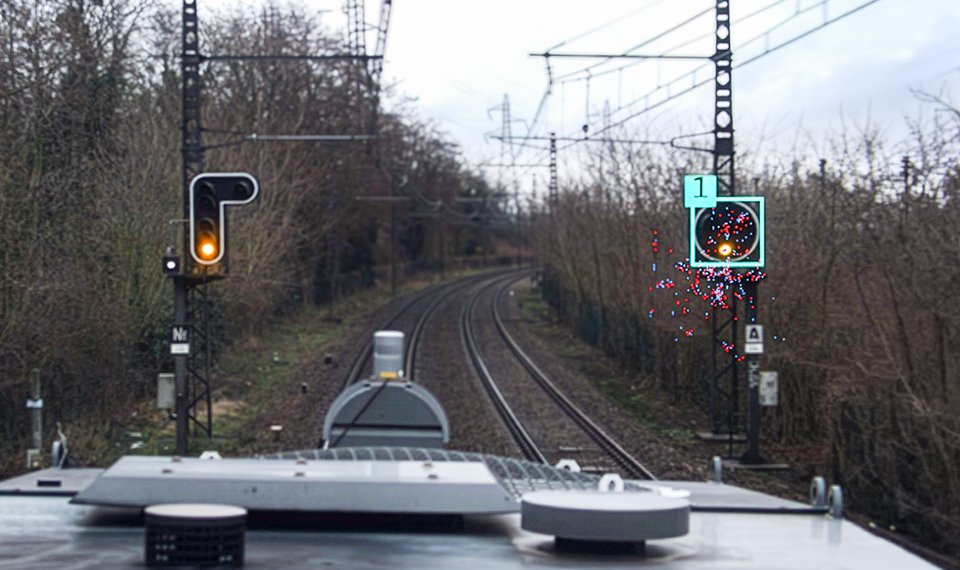
In the railway world, safety is not an option, it is a sine qua non condition. While artificial intelligence is helping advance technologies related to automation projects or driver‑assistance systems, it still faces a major obstacle: the “black box” effect. How can we guarantee that a vision algorithm won’t mistake the moon for an orange signal, or that it won’t be fooled by a single modified pixel?
It is to address this crucial question that the Group’s Technology, Innovation and Projects Department has been collaborating with Numalis for nearly seven years, a Deeptech based in Montpellier (France).
From defense to rail: the origin of a meeting
It all began during a «speed‑dating» event organized by the French Defence Procurement Agency (DGA). Cyril Cappi, technology risk strategy expert at SNCF, discovered Numalis there. At the time, the startup was working on classified defense programs to ensure missile reliability.
« I immediately saw this company’s potential to help answer our questions about train autonomy. Because while vision‑based AI (deep learning) is powerful, it is inherently inexplicable. For an airplane or a train, this opacity is incompatible with safety standards.» – Cyril Cappi, technology risk strategy expert at SNCF Group
A new logic
With machine learning and now deep learning neural networks, AI‑based computer systems rely on a fundamentally different logic.
«Traditional programs follow a deterministic logic: an identified situation triggers a predefined action according to pre‑programmed rules. With deep learning, this logic is reversed: instead of explicitly encoding rules, the model learns them from data collected in real‑world situations. This approach can deliver very strong performance, but it also introduces new types of errors, particularly related to operational conditions or sensor quality. The tool developed by Numalis aims to analyze the robustness of deep learning models in order to provide the safety guarantees required for their integration and certification in future onboard perception systems.» – Cédrick Lelionnais, RSYS AI – R&D Vision & Audio, SNCF Voyageurs (Engineering Department)

Saimple: the tool that “stress‑tests” AI
The core of Numalis’ technology lies in formal methods. Unlike traditional testing, which relies on multiplying simulations of real situations, their software, called Saimple, uses mathematics to explore the entire field of possible scenarios.
«The tool injects various types of “noise” (blur, pixel modifications, Gaussian perturbations) into the AI model to verify its stability. AI is a very precise but fragile technology. A single altered pixel, invisible to the human eye, can be enough to make an AI misidentify a person. Saimple helps detect these vulnerabilities before they become critical. This is essential for safety‑related trust, but also extremely useful for cybersecurity sovereignty.» – Cyril Cappi, technology risk strategy expert at SNCF Group
A concrete success: validating ERTMS onboard screens
Far from being a purely theoretical project, the Numalis solution is already operational within the Engineering Department of SNCF Voyageurs. It has notably made it possible to automate the certification of the onboard displays of the European signaling system ERTMS.
Previously, humans had to manually verify that every icon and every color on the train cab displays complied with stringent standards. By entrusting this task to an AI audited by Numalis, SNCF Voyageurs not only saved valuable time but also strengthened the reliability of the process.
«We discovered that certain invisible ‘watermarks’ were disrupting the AI’s decisions. The Numalis solution allowed us to correct these issues.» – Cyril Cappi, technology risk strategy expert at SNCF Group

By supporting Numalis, the SNCF Group is not simply purchasing an “off‑the‑shelf” technology. It is contributing to the emergence of a global certification standard, an essential building block to ensure that, in the future, connected trains will be able to operate safely on the national rail network.
574 Invest and Numalis: a strategic partnership for railway innovation
The investment fund 574 Invest, dedicated to startups and backed by the SNCF Group, is strengthening its commitment to the tech ecosystem by participating in Numalis’ fundraising round. This initiative is part of a broader approach: since its creation, 574 Invest has benefited from the active support of all Group entities, including the Group’s Technology, Innovation and Projects Department, ensuring strong alignment between its investments and the Group’s strategic priorities.
« This operational partnership with Numalis, followed by a minority equity stake, reflects our approach of investing where we can generate a double impact. Our ambition is clear: combine financial performance with operational value creation for the SNCF Group.» – Lucas Rudolf, Managing Director of 574 Invest
« It is a true illustration of our DNA: identifying future French tech champions, supporting their growth, while rapidly generating operational benefits for the Group and strengthening the sovereignty of France and Europe.» – Cyril Cappi, technology risk strategy expert at SNCF Group
Beyond a simple financial contribution, this commitment represents a genuine strategic choice in service of the French industrial sector.
As Europe deploys its AI Act, the ability to prove the ethics and robustness of systems is becoming a major competitive advantage. Numalis, whose founder, Arnault Loualalen, is the lead author of the international ISO standards on AI robustness (ISO/IEC 24029), places France in a leading position in this emerging “trust” market.

